Research
What is the space motion of interstellar gas in the solar neighborhood? How do diffuse interstellar clouds form and collapse to form stars, planets, and eventually, life? How do these clouds interact with the Solar System on its Galactic journey?
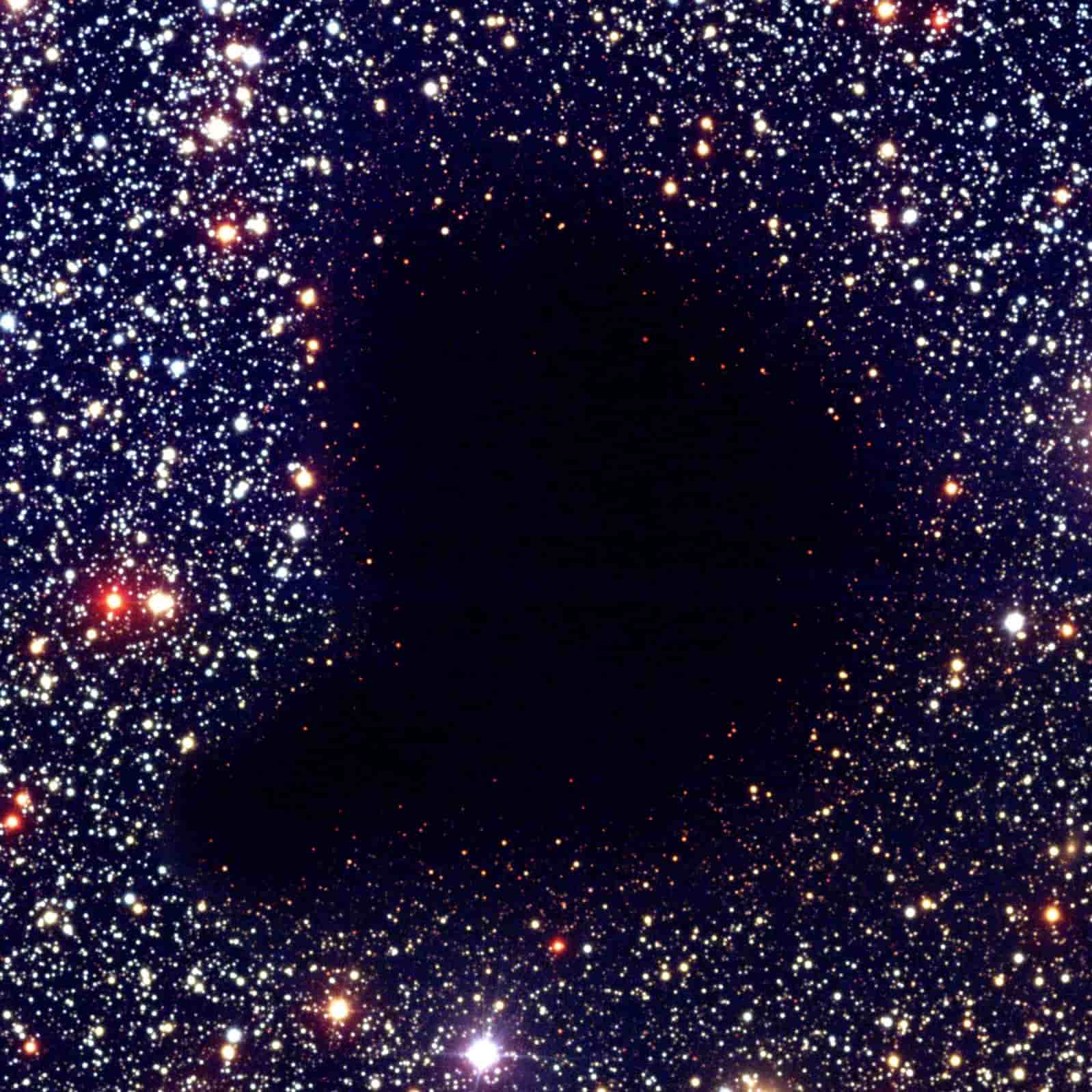
To address these questions, we combine large NIR ESO surveys, ESA Gaia, Herschel, and Planck, integrating astrometric, photometric, and dust extinction/emission data into a coherent three-dimensional view of the interstellar medium. By linking stellar kinematics with the spatial distribution and physical properties of dust and gas, we reconstruct the dynamical structure of nearby star-forming regions and reveal how interstellar gas organizes itself into the structures that give rise to stars, planets, and life.
Upcoming international meetings organized by the group:
- ISM-FLOW Workshop 3 (Maria Taferl, April 2026)
- Star Formation Fields (Crete, September 2026)
- The Galactic Journey Of The Solar System: Astronomical, Geological, And Paleo-Climatological Perspectives (Garching bei München, May 2027)
The research group is organized around the following main themes:
The Radcliffe Wave and the local superclouds
The solar neighborhood is structured by a chain of giant molecular cloud complexes arranged along a coherent, 2.7 kpc sinusoidal wave of gas now known as the Radcliffe Wave (Alves et al. 2020). These superclouds are the mother clouds: vast, coherent reservoirs of atomic gas that fragment into giant molecular clouds that eventually collapse into the star-forming regions that populate the Galactic disk. Every star in the solar neighborhood, including our own Sun, was born inside one of these structures.
We are mapping the three-dimensional architecture and kinematics of the Radcliffe Wave and its superclouds using Gaia astrometry, radio surveys, and 3D dust reconstruction, tracing how gas flows into these structures, how they fragment into star-forming regions, and how stellar feedback eventually disperses them, completing the cycle that has driven star formation in the Milky Way for billions of years.
Star-forming regions
The superclouds do not form stars directly, they must first fragment into the cold, dense filamentary molecular clouds where star formation actually takes place. From filament formation, all the way to the assembly of stellar clusters, we study how molecular gas converts into stars across a range of environments. Current work focuses on the 3D motion of Ophiuchus, Taurus–Perseus, and Orion using our ESO Public Survey VISIONS, ESA Gaia, and JWST data. Our recent results show that these regions are part of extended, dynamically connected structures shaped by large-scale flows, with coherent velocity patterns linking filaments, cores, and young stellar populations, sometimes in long chains of stellar clusters. This supports a picture in which star formation proceeds within a continuously evolving network rather than in isolated, static clouds.
Young stellar populations & cluster dynamics
The stars that emerge from these star-forming regions do not simply disperse into the field, they retain memory of their birth environment in their motions and spatial distribution for tens of millions of years. We trace the young (< 100 Myr) stellar population of the Milky Way, OB associations, open clusters, and moving groups, to understand how star formation histories couple to large-scale gas dynamics. Recent results show that nearby young populations are not isolated clusters, but part of dynamically coherent extended families. In particular, we find evidence that the Sco–Cen complex, a prime laboratory for our group, is embedded in a network of expanding shells and cluster families, linking it to the broader structure of the local Galactic disk and revealing how clustered star formation imprints long-lived kinematic patterns on young stars and the ISM.
The impact of the Milky Way on planet Earth
Every 250 million years, the Solar System completes one full orbit around the Milky Way. Along the way, it passes through a changing landscape of interstellar gas, dense clouds, and stellar nurseries. Far from being a passive backdrop, the Galaxy is an active influence on the history of our planet and the conditions for life. We are investigating how the Sun’s passage through dense interstellar clouds has left its mark on Earth’s geological and climatic record, and how large-scale flows of high-velocity gas escaping from nearby star-forming regions such as Sco–Cen and Orion shape the local interstellar environment the Solar System moves through. These outflows may modulate the very conditions encountered by Earth on its long Galactic journey.
Telescopes & data
The group is leading the ESO Public Survey VISIONS, which is mapping the 3D structure and kinematics of nearby star-forming regions in the near-infrared. We have developed a photometric and astrometric data reduction pipeline for the VISTA telescope, which we are applying to the VISIONS data to produce high-precision, multi-epoch catalogs of young stars and dust extinction.
The group is closely connected to the Vienna node of the A-star consortium and uses A-star Vienna’s ScopeSIM for the ESO ELT preparatory science. This enables realistic end-to-end simulations of ELT observations, linking instrument performance with science requirements and survey strategies.
In parallel, the group develops data science approaches tailored to large and complex survey datasets, combining ESO surveys and ESA space missions. By building these frameworks now, we position ourselves to fully exploit the next generation of large surveys and facilities, including the Rubin and ELT-era data, within a consistent multi-wavelength approach to the understanding of the transformation of the interstellar medium into stars and planets.